
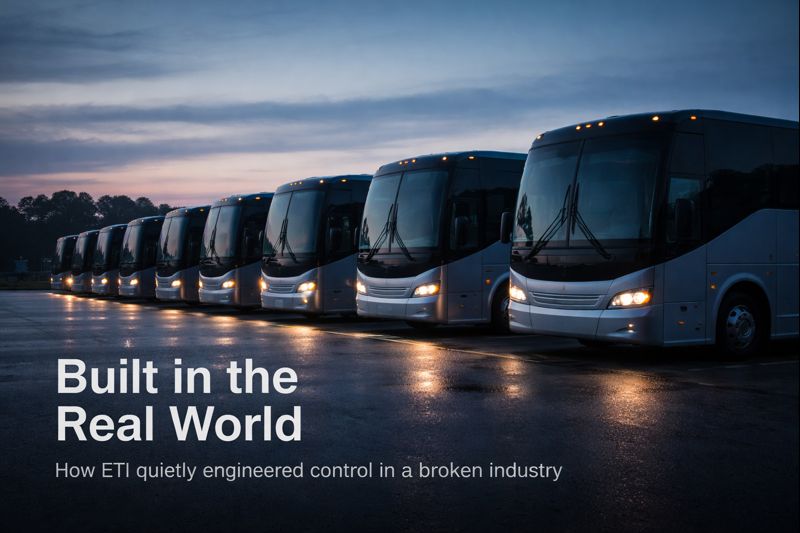
We didn’t wake up one day and decide to build software.
We were forced into it.
ETI Limo & Charter has been running real trips for decades — real buses, real drivers, real consequences when things go sideways. Anyone who’s actually operated at scale knows the truth: the work gets harder every year, and the margins get thinner.
Brokers don’t carry the risk. Platforms don’t own the buses. Operators do. And somehow we’re expected to survive on what’s left. That math doesn’t work forever.
So instead of buying more buses and hoping volume would save us, we started building the system we wished existed. Not a dashboard. Not another quoting tool. A control layer.
Charter X came out of the moments where everything breaks — when a client needs eight coaches and no single company can cover it, when supply dries up, when one failure shouldn’t kill the entire job.
What we ultimately built wasn’t just software — it was a transportation control plane designed to enforce certainty in a fragmented, margin-compressed industry.
The breakthrough was simple but painful to get to: stop treating a trip like one fragile booking. Every vehicle matters. Every unit needs its own identity. Once we did that, scale stopped being dangerous and started being manageable.
Now when capacity is tight, the system doesn’t say “sorry.” It says, “here’s what will work.” We solve the problem, even if the backend is chaos. The customer never has to know.
This isn’t about being cheaper. We’re done racing to the bottom. It’s about certainty — trips that don’t collapse, margins that don’t evaporate, partners that know the rules upfront.
ETI still does the hard part — executing in the real world. Charter X makes sure the business side doesn’t self-destruct while we do it.
We didn’t build a tech company to look innovative. We built it because the old way eventually breaks. This is what surviving — and scaling — actually looks like.



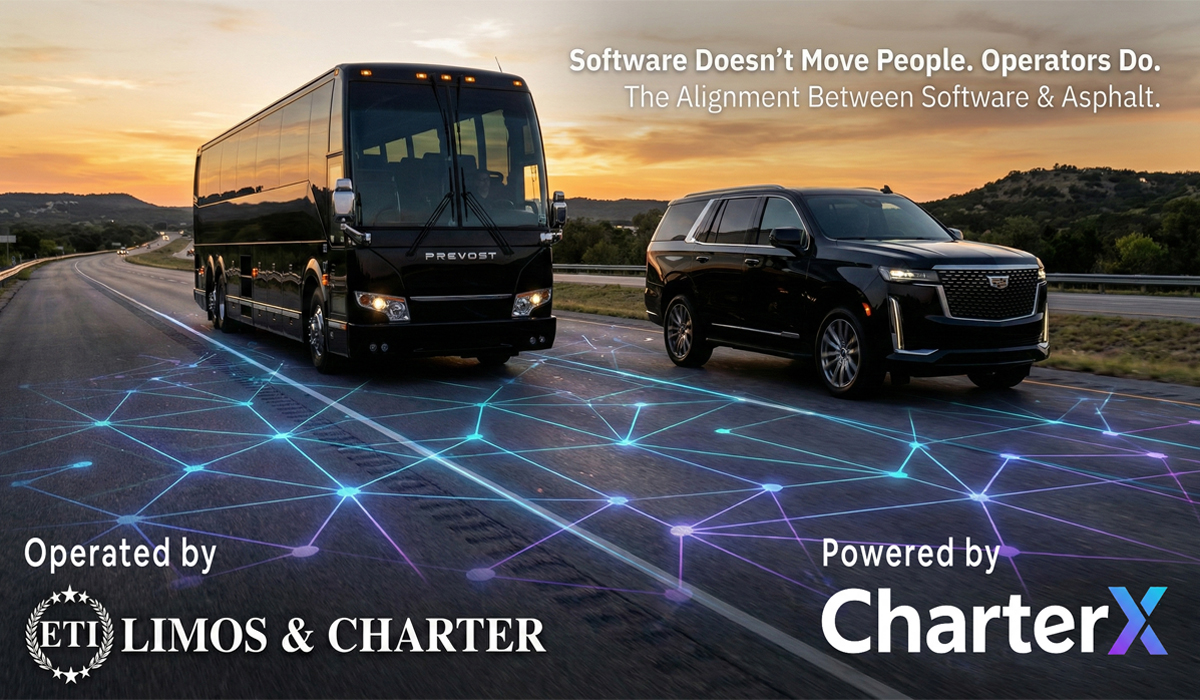
Software Doesn’t Move People. Operators Do.
There’s a misconception in modern mobility that technology alone transforms transportation. It doesn’t. Vehicles still…
Built in the Real World
We didn’t wake up one day and decide to build software.We were forced into it.…

Enhancing Tourism Experience with ETI Limo and Charter’s Certified Tourism Ambassador Designation
Welcome to ETI Limo and Charter Your trusted partner in luxury transportation, committed to delivering…
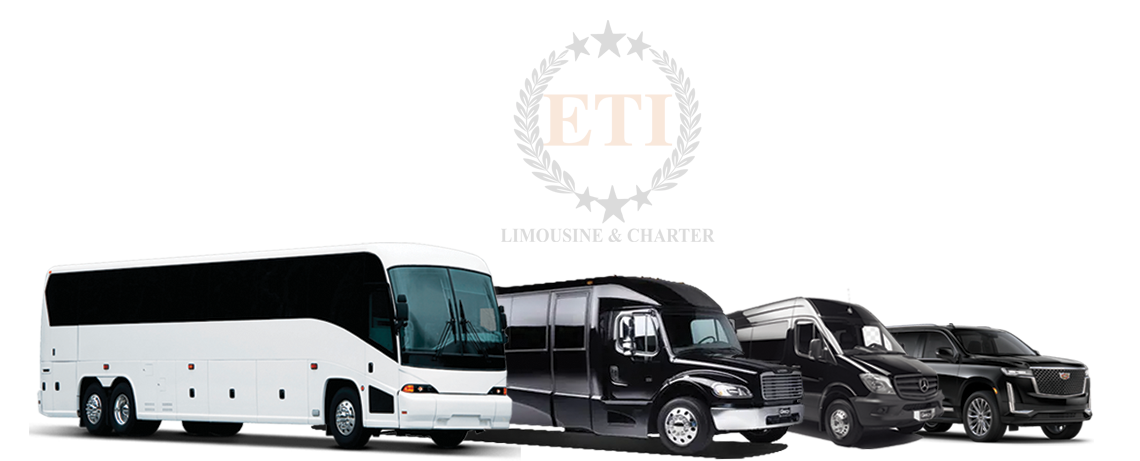
Exploring the Distinctive Features of Buses and Coaches
Navigating the Road: Unveiling the Differences in Design and Function Buses and coaches: familiar yet…

WHAT IS THE DIFFERENCE BETWEEN A BUS AND A COACH?
Buses and coaches are similar modes of transport but have several significant differences. Not sure…

Best Fall Events In Austin
Best Fall events in Austin, Texas this year are amazing! Fall season is upon us…
